

For WhatsApp
I am learning the why of cooking, 5 minutes a day. Join me on Commis Club: /app/
Commis Club · The chefs’ community
Short lessons from a chef with 30 years in professional kitchens. Learn why things happen, not just what to do.
Five minutes a day. Better knowledge. Better habits. Better opportunities.
Your 1% today
Two pots test. Use 4 eggs from one tray.
Our story
Not a recipe app. Not a school. A chef mentor in your pocket.
Young cooks in Southeast Asia and India work hard. Many earn little. Many learn without a mentor.
In a busy kitchen, there is little time to ask why. So the same mistakes come back.
Commis Club gives them the what, the why and the how of cooking. Five minutes a day, on the phone they already have.
Become 1% better every day.
Our philosophy
Six ideas shape every lesson.
We explain why something happens. Then the steps make sense, and you can fix a dish that goes wrong.
Small steps, every day. Five minutes is enough. Small gains add up over a career.
Each lesson starts with a question. You guess before you learn. Then a live visual shows the science.
Every lesson ends with one test for your next shift. It uses what you already have: an offcut, a pot, a timer.
We talk to you like a senior chef would. Warm, but demanding. Never talking down.
Every fact comes from a source we opened. Every lesson has a safety line. Follow your local food rules.
The founder
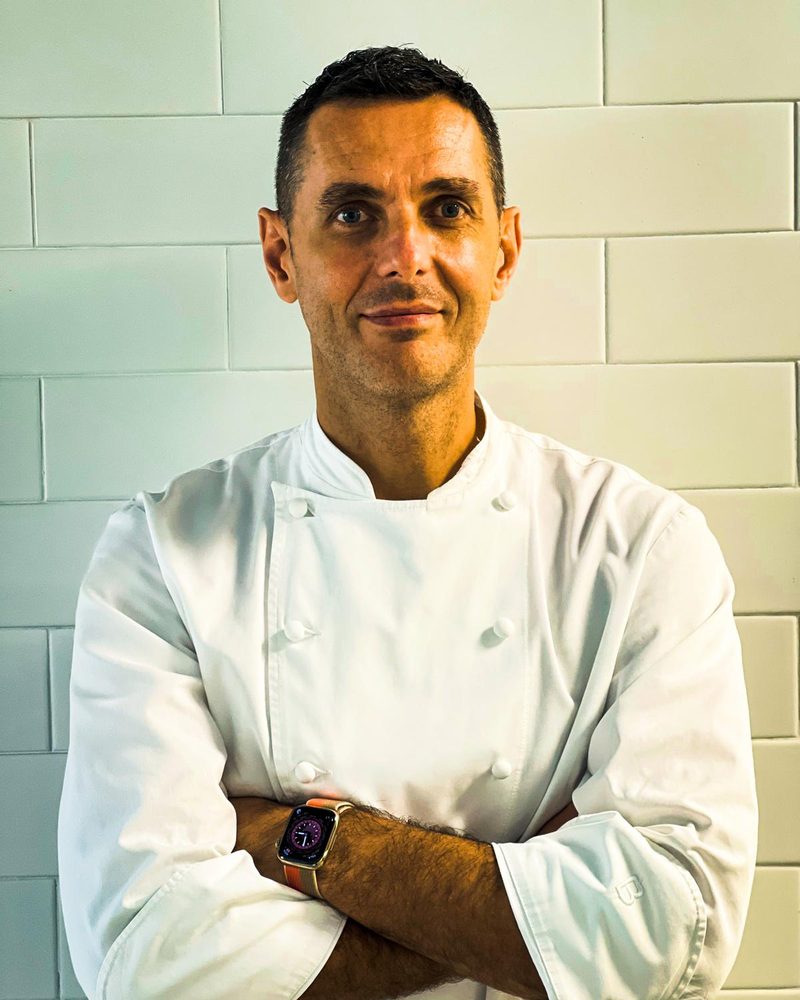
French chef, based in Singapore. 30 years in professional kitchens.
Chef Michael built Commis Club to share the why of cooking with young cooks.
In Chef Michael's words
[Michael to write 2 or 3 sentences about why he started Commis Club]
Three paths, 30 lessons
Built for young cooks aged 18 to 30 in Southeast Asia and India.
21 lessons
The why behind heat, eggs, salt and sauces.
For example: why does fried food go soggy?
5 lessons
How great cooks prepare, think and work.
For example: mise en place, standards and taking feedback.
4 lessons
Purpose, discipline and getting 1% better.
For example: what makes a great cook?
The same list and order as the Learn screen in the app. New: knives, frying, allergens, stock, taste, coconut milk, sticky pans and bacteria.
How 5 minutes works
Each lesson shows what happens, why it matters and what to do tomorrow.
Live visuals
Every science lesson has a live visual. You change the fire, the time or the pan, and watch what happens. The last screen gives you a small task to solve.
Habits lessons use small kitchen scenarios instead. Your choices change what happens.
Also inside the app
Choose a food, a water temperature and a time. Temperature sets how done it is. Time makes tough cuts tender and food safe.
Temperature tells how hot something is. Heat is energy that flows from hot to cold.
Key ideas from your lessons, as cards. After a lesson, you get a new card. A few days later, the app asks you again, so the idea stays.
Watch and discover
We only link. Each video opens on its own platform, with full credit to its creator.
Find Watch and discover on the Learn screen of the app.
7 languages
Read in your language, in English, or in both together. Hindi is there for cooks in India. Kitchen words like mise en place stay in English, as they do at work.
Free lessons
Six short reads from Commis Club lessons. The full lesson adds the live visual, the quiz and your 1% action.
Kitchen Science · Rice
Hard or mushy rice is about the water, not luck. Rice cooks by soaking up the water you add. Too little, and the centre stays hard. Too much, and the grains swell soft and wet. So is rinsing the secret?
“Rinsing is the main way to stop rice going sticky.”
MythThe water and the type of rice matter more than rinsing. In one study, as reported, rice was washed 0, 3 or 10 times. Washing did not change how sticky or hard it was. Rinsing does wash off dust and loose starch.
Rice cooks by soaking up the water in the pot. Hot water lets its starch swell and take in far more.
Most of the water you add ends up in the rice. So the amount sets the texture. Amylose is one of the two kinds of starch chain. Jasmine is low in amylose. Basmati is usually higher in amylose, so it needs more water.
Rest the rice with the lid on once the water is gone. At that point, each grain is wet outside but still firm inside. With the lid on, water keeps moving into the centre.
Stay safe. Cooked rice can carry Bacillus cereus. Its spores survive cooking, and its vomiting toxin survives reheating. Keep rice at 60°C or hotter, or chill it to 4°C or colder. Reheat only once, until steaming hot. Follow your local food rules.
Kitchen Science · Eggs
Every kopitiam (coffee shop) serves half boiled eggs with kaya toast. The fire goes off before the eggs go in. Five to seven minutes later, they are perfect. Why?
“A bigger fire makes boiling water cook eggs faster.”
MythBoiling water stays at about 100°C, a little less in the highlands. A bigger fire just makes more bubbles. Use it only to bring the water back to the boil.
Heat moves slowly from the shell to the centre. Proteins are tiny folded balls. Heat unfolds them. Then they link into a net that holds water. That is what set means.
Part of the white sets at 62°C. Most needs 80°C. The yolk sets near 70°C.
Boiling water is far hotter than 80°C. It keeps pushing heat in. Off the fire, the water cools as the eggs cook. So they overcook much more slowly.
Stay safe. Runny eggs are not for young children, pregnant women, or old or sick guests. Use pasteurised eggs for them.
Kitchen Science · Browning
Two pieces of the same chicken, ready for ayam goreng or adobo. Same pan, same fire. One comes out golden and crisp. The other comes out grey and wet. What was different?
“Searing the meat first seals the juices inside.”
MythTests since the 1930s show seared meat loses as much juice, or more. Sear for colour and flavour. Juiciness depends on the final inside temperature.
Brown meat is not caramel. Meat has almost no sugar. The brown comes from the Maillard reaction. Proteins and traces of sugar react on a hot, dry surface.
Now the wet piece. Water cannot get hotter than 100°C while it boils. So the wet face stays near 100°C for a long time. Browning waits until it is dry.
All meat leaks juice as its inside warms, seared or not. Ten cold pieces cool the pan and cover the floor. The juice cannot boil off fast enough. It pools, and the meat simmers.
Brown in batches. Two small batches brown faster than one big pile.
Stay safe. Colour does not prove meat is cooked. Check chicken and minced meat with a thermometer. Wet meat spits in hot oil, so stand back.
Kitchen Science · Foundations
Your hand can reach into a hot oven briefly, but steam soon burns it. The oven air may be 180°C. The steam over a boiling pot is only about 100°C. So the number on the dial is not the whole story.
“Air at 100°C heats food as fast as water at 100°C.”
MythTemperature is how hot something is. Heat is energy flowing from hot to cold. Heat flow depends on the temperature gap and on what touches the food. Water conducts heat about 23 times better than air.
Steam at 100°C heats food faster than oven air at 200°C. Air is light and conducts heat poorly, so little heat reaches the food. Steam turns back into water on the cold food. That gives off a lot of heat.
Food cooks from the outside in, so thick food is slow. The outside gets hot while the centre stays cold. Twice as thick takes about four times as long.
Wet food cannot get hotter than about 100°C. Extra heat boils off its water. Once the surface is dry, it gets hotter and a crust forms.
Stay safe. Steam can burn worse than boiling water. Open lids away from you. Never put water on an oil fire. Turn off the heat and cover the pan with a lid. Cool a burn under cool running water. Do not use ice.
Kitchen Science · Sauces
Cornflour does nothing in cold stock, then turns it thick near the boil. Keep boiling, and the gravy goes thinner again. Why does starch change so fast?
“The longer you boil a starch sauce, the thicker it gets.”
MythLong boiling weakens the starch instead of thickening it. Hard boiling and stirring break the swollen grains, and the sauce thins. Potato starch and tapioca thin the most.
Starch thickens only when it gets hot. In cold water, starch grains just sink. Heat lets them soak up water and swell many times bigger. Long starch chains leak out and tangle.
Boil and stir too long, and the sauce thins again. Hot stirring breaks the swollen grains apart.
A starch sauce gets thicker again as it cools. So take it off the heat a little thinner than you want.
Stay safe. Hot starch paste sticks to skin and burns. Stir with a long whisk. Hold starchy food above 60°C, or cool it fast. Follow your local food rules.
Kitchen Science · Knives
Which knife cuts cooks more often: a sharp one or a blunt one? Your push depends on the edge, the board and your guide hand. If the edge skids, all that push moves the blade. Tonight you slice shallots for sambal. Which knife do you pick up?
“A blunt knife is safer for a beginner, because it cuts less easily.”
MythA blunt knife still cuts skin, and it slips more. US safety officials (OSHA) say dull knives tend to slip. A sharp knife needs less push, so you stay in control.
A blunt edge is wider, so you must push harder to cut. With use, the edge wears round and wider. A wide edge dents the skin first, then breaks it. WorkSafe Queensland says sharp knives need 30 per cent less force on meat.
In the claw, your knuckles guide the blade, and your fingertips stay behind them. Only the flat of the blade touches you, at the knuckle. With flat fingers, the fingertips reach into the blade path.
Honing straightens a bent edge, and sharpening grinds a new one. When honing stops helping, the edge is worn round. Then it needs sharpening, which grinds away metal to make a new edge.
Stay safe. Let a falling knife fall. Do not try to catch it (OSHA). If you cut yourself, press hard on it with a clean folded cloth. Press for 10 minutes, and raise your hand above your head (NHS). Get emergency help if the bleeding will not stop, or blood spurts out. Tell your chef about every cut.
For schools and teachers
Commis Club is study support. Schools still teach and assess every unit. Students need only the app link on their phone. No account or email.
Show my teacher
The teacher gives each student a class tag and a class list number. No name, no email. The student makes a code on the phone. They send it in a private chat, or read it out.
Nothing is uploaded. Only the student can send the code. In the app: Progress, then Show my teacher.
Start and end of term check
Students take 10 questions in week 1. They take them again at the end of term. It shows what they learned. It gives no XP.
Class report
The teacher pastes the codes into the code checker. It reads them on that device and makes a class table.
In the app: Progress, then For schools, then Check progress codes.
Practice, not assessment. No names. Nothing uploaded.
Our lessons support units in five sets of standards: Worldchefs, TESDA, WSQ, THSC and SKM.
We made this map ourselves. No standards body has reviewed or endorsed it.
Teachers can preview every lesson free, with no payment. Nothing is saved. Teacher notes give one page per lesson, in English for now.
Contact details coming soon.
Bonus recipes
Coming: recipes from La Table d'Emma. They will sit here, and inside the app.
Join
US$5a year
One year of everything. One price for all.